Why Surface Compatibility Testing Matters in Furniture Protection
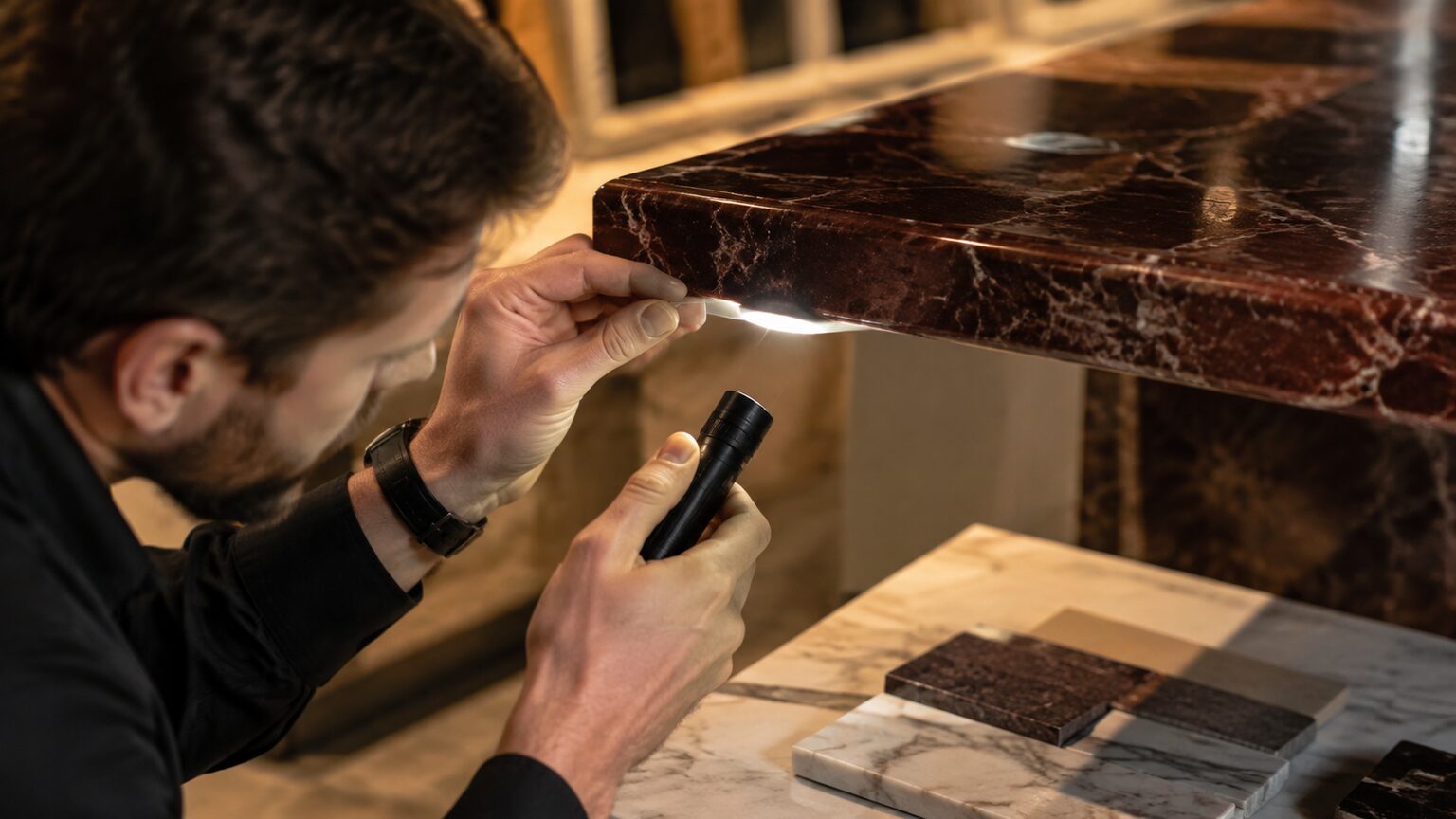
Why Surface Compatibility Testing Matters in Furniture Protection
A small-area test before film installation helps assess adhesive contact, gloss change and removal behaviour, reducing avoidable risk to furniture finishes.
Technical overview
Furniture protection must be treated as a system involving the substrate, finish, adhesive, protective film and use environment. A product description alone cannot establish compatibility. Marble, lacquer, wood, glass and composite surfaces can respond differently to cleaning, adhesive contact, moisture and removal.
Practical evaluation
Before full installation, the surface should be identified, cleaned with a compatible method and tested in a hidden area. The sample should be checked for initial contact, haze, colour or gloss change, edge behaviour and controlled removal. Film should not be installed when the finish is unstable, contaminated, moisture-sensitive or otherwise unsuitable.
Key considerations
- There Is No Single Surface: Lacquer, natural wood, veneered MDF, marble, quartz and glass cannot be assessed with the same method. Factory varnish, later touch-ups, silicone cleaner residue or moisture on the surface can change how the adhesive behaves.
- How Is the Test Done?: A small hidden area is cleaned and the surface is recorded with a photo. A small film sample is applied; initial adhesion, bubbles, and changes in colour and gloss are observed.
- Laboratory vs. Field Distinction: Methods such as ISO 2409 and ASTM D3359 are controlled procedures for assessing coating systems by detachment or tape testing. They cannot be said to be the same test as a small film trial on site.
- Why Record-Keeping Matters: The test area, date, surface type, sample used and result should be recorded. This way the application decision rests on a traceable check rather than a personal guess.
Installation checklist
- Identify the surface and existing finish.
- Follow the film manufacturer's instructions.
- Test a hidden area before full installation.
- Avoid absolute claims without relevant laboratory evidence.
- Record the product, surface, test result and care instructions.
Conclusion
Transparent surface-protection film can help reduce risks from ordinary use when the complete system is compatible. It does not make furniture impossible to scratch, stain or damage. Reliable results depend on assessment, suitable materials, professional installation and correct maintenance.
Sources and Technical References
About ISO source links: ISO standards are referenced by their standard number and publication year. Links lead directly to the official ISO website; no ISO standards text, images or logos are reproduced here. These references do not imply ISO certification, endorsement, approval or affiliation with MKK. Check the linked official ISO record for the current status of each standard.