New No-Wipe Waterborne Stain for Furniture Production
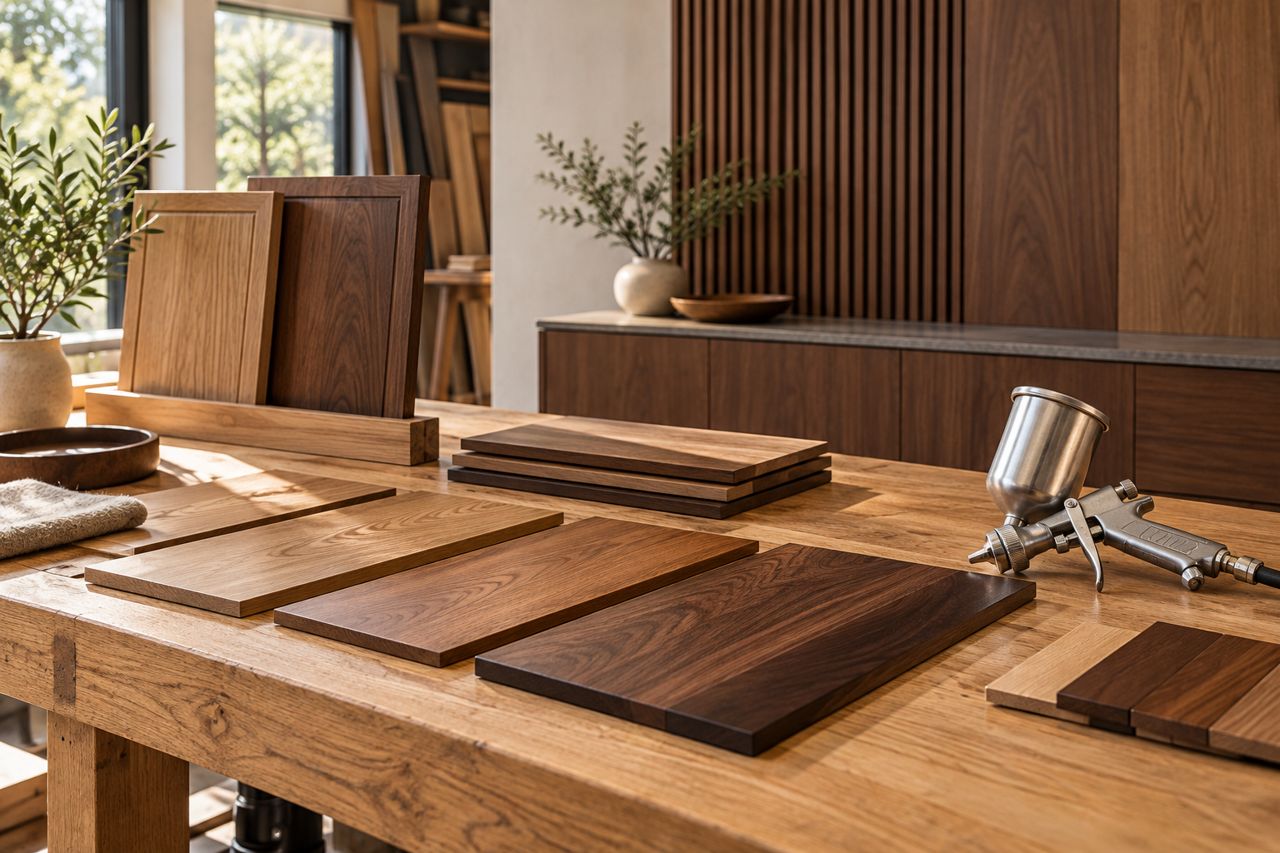
Gemini Industries has added a waterborne spray no-wipe stain base to EVO ColorTools. The option brings finishing workflow into focus for furniture and architectural wood production.
Woodworking Network reported the addition on 7 October 2026. The product is intended for manual or automated spraying. Sales executive Kevin Laughlin describes a process in which finishers spray, allow the stain to dry and continue to the next production step.
What is new?
The ColorTools family was announced on 11 August 2026. The current development is the additional no-wipe spray option, rather than the original launch of the entire range. Gemini’s product page confirms the option and identifies furniture, kitchen cabinetry, architectural woodwork and store fixtures among its applications.
Production implications
Reducing a wiping step may simplify a finishing workflow, but preparation, drying and subsequent finishing remain separate considerations. Manufacturers should evaluate the proposed process with their own timber, equipment and finished-appearance requirements.
The reviewed announcements provide no measured labour-saving percentage for a Turkish workshop. A production trial is needed before translating an announcement into a local time or cost forecast. Colour consistency across completed pieces deserves attention alongside the number of steps.
Finishing and protective film
Achieving the required colour does not establish suitability for a protective film. A film contacts the completed surface system, so the final coating, manufacturer guidance and practical compatibility assessment remain important.
The reviewed material does not provide an MKK® SPF compatibility test. A waterborne stain description alone should not be treated as film approval.
Perspective for Türkiye
Furniture manufacturers, interior designers and joinery workshops can follow the development as another process option. Projects with repeated components may benefit from documenting how approved samples relate to production results.
The sources provide no Türkiye-specific price, distributor or delivery date. Current documentation and local availability should therefore be checked separately. Factory staining a new part also differs from refurbishing an existing item on site; the condition and preparation requirements of the existing furniture remain central.
MKK® Industry Assessment
For MKK®, the development provides a useful reason to connect surface production with care and protection decisions. An interior specification can describe both the intended appearance and the expected use of the finished piece. This is editorial analysis, rather than a claim made by the manufacturer.
A sample intended for protective-film evaluation should address appearance and suitability separately. The product announcement does not change MKK®’s policy of excluding edge-banded products because of swelling risk.
Refurbishment should begin with the actual surface and the customer's objective. New finishing technologies can expand the options considered, while individual assessment determines the application decision.