How Architectural Wrapping Can Be Included in BIM and Digital Project Files
How Architectural Wrapping Can Be Included in BIM and Digital Project Files
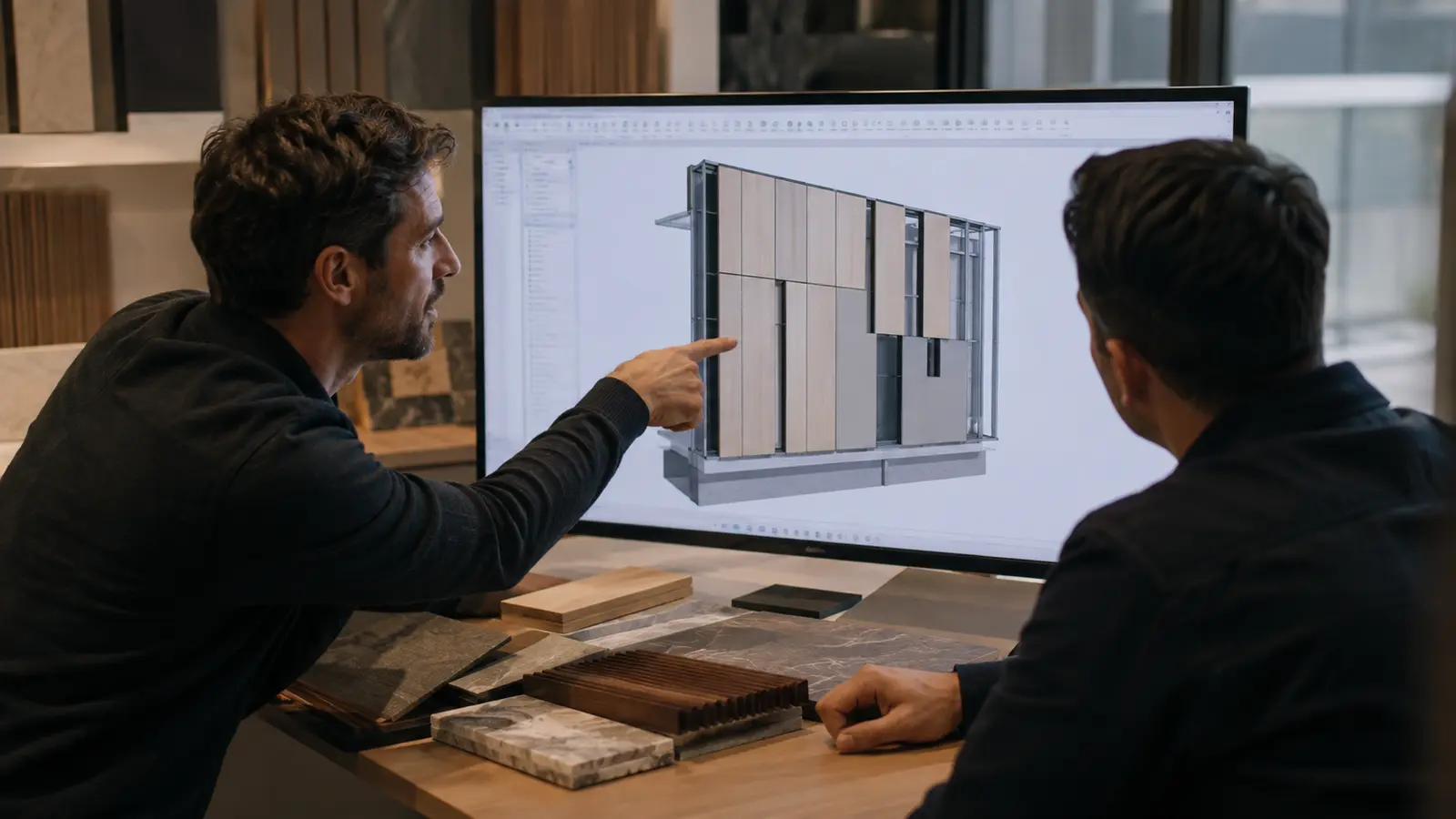
Film code, substrate, location, quantity, care data and installation date can be linked to BIM or digital project records.
What you will learn
- Why the subject matters to architectural wrapping
- Which information should be verified during project decisions
- How technical evidence differs from marketing language
- The principal installation, use and maintenance risks
- Developments that may shape future practice
Why is the subject gaining importance?
Architectural wrapping is more than applying film to a surface. Substrate type, existing coating, traffic, environment, cleaning and expected service period form one system. The subject therefore needs to be considered through design, material evidence, installation management and aftercare.
Film code, substrate, location, quantity, care data and installation date can be linked to BIM or digital project records.
Which information should be reviewed?
The exact product code and technical data sheet should be verified first. Reports should identify the specimen, substrate, method and limits of the result. Evidence for another product or build-up must not be represented as proof for the selected system.
The actual surface should be photographed and checked for swelling, cracking, weak paint, polish residue, moisture and repairs. A discreet controlled sample can help assess adhesion, appearance, edges and potential removal behaviour.
Professional project workflow
- Define the substrate and intended use.
- Record environmental and mechanical loads.
- Review applicable technical evidence.
- Test a representative discreet area.
- Plan film, seams, edges and maintenance.
- Record the product code and completed work.
- Provide correct cleaning and care guidance.
Common mistakes
A single property should not be treated as proof of total performance. Thickness, gloss, adhesion or one laboratory result is not an unconditional guarantee of real use. Claims such as suitable for every surface or completely scratch-proof require clear limitations and evidence.
MKK® technical approach
MKK® Mimari Kaplama Koruma does not assume that every surface is suitable. Material, existing coating, edges and use conditions are reviewed. Repair or an alternative solution may be recommended for unstable, damp, swollen or technically unsuitable surfaces.
What comes next?
Verifiable technical data, digital records, specialist installers and lifecycle services are becoming more important. AI and image analysis may accelerate initial assessment, while field testing and human expertise remain necessary.
Frequently asked questions
Do all architectural films give the same result?
No. Carrier, top coat, adhesive, substrate and use conditions affect performance.
Is a sample necessary?
A controlled test reduces avoidable risk on sensitive, coated or unknown surfaces.
Is a technical data sheet enough?
It is a primary reference but must be read with the actual substrate and project conditions.
Conclusion
How Architectural Wrapping Can Be Included in BIM and Digital Project Files is not only a product-selection issue. It requires reliable data, a suitable substrate, professional installation and documented care.
Official institutions and global-brand sources
- ISO 19650-1 – BIM bilgi yönetimi
- ISO 19650-3 – Varlıkların operasyon aşaması
- 3M DI-NOC Architectural Finishes – Teknik Veri Föyü
- LX Hausys – Resmî teknik veri föyleri
Global-brand links illustrate sector documentation and installation approaches. Their data does not represent MKK® product performance.