Why Marble Tables Stain and Lose Their Shine (And the Fix That Actually Works)
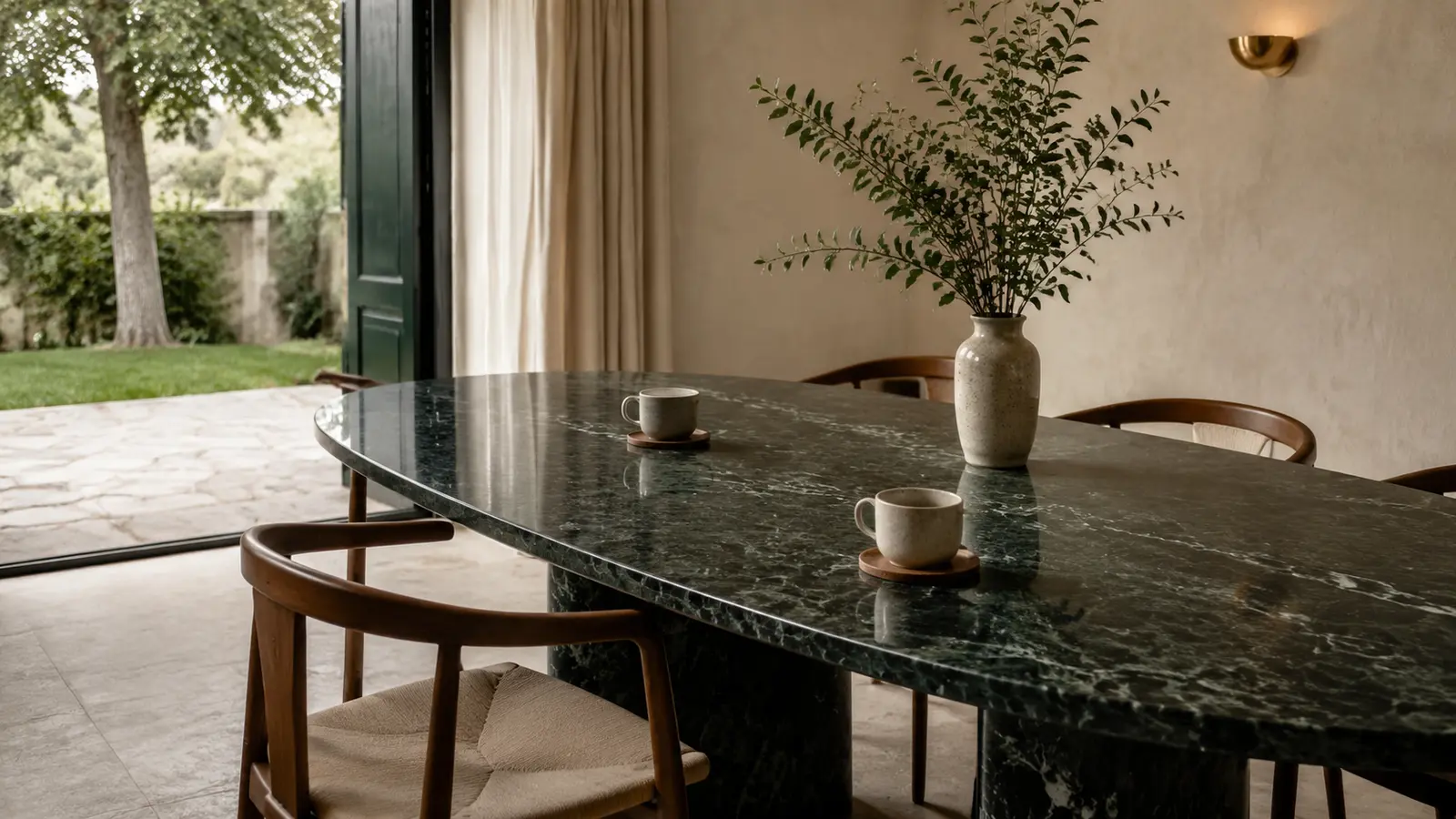
Marble Isn't as Tough as It Looks
Marble is prized for its veining and depth, but chemically it's calcium carbonate — and calcium carbonate has a well-known weakness: it reacts with acid. When an acidic liquid sits on a marble surface, it doesn't just risk leaving a stain; it can chemically etch the polished layer of the stone itself. That's why the dull, cloudy patches so many marble table owners notice aren't always "stains" in the traditional sense — they're etch marks, and once the polish is gone, it doesn't come back with a wipe-down.
So marble surfaces really face two separate problems:
- Staining, where liquid soaks into the stone's porous structure and leaves discoloration.
- Etching/dulling, where acid chemically strips the surface polish, leaving a matte patch that no amount of cleaning removes.
What's Actually Attacking Your Marble Table
Most of the damage comes from things that seem completely ordinary:
- Coffee and tea — acidic and dark-colored, a double threat.
- Lemon juice, vinegar, tomato-based sauces — common kitchen acids.
- Cola and other carbonated drinks — high acidity, fast reaction.
- Glasses without coasters — condensation seeps into the stone's pores and leaves ring marks.
- The wrong cleaning products — many all-purpose or "shine-restoring" sprays contain vinegar or citrus acid, which is exactly what damages marble in the first place.
That last point catches most people off guard — the very act of trying to keep the table looking clean can be what dulls it over time.
Why Sealants Are a Temporary Fix, Not a Solution
The standard advice for marble has always been to apply a penetrating sealant. Sealants do offer some stain resistance by partially filling the stone's pores, but they wear down within months and need reapplication on a recurring basis. More importantly, a sealant does nothing against scratches, hot pans, or daily abrasion — it only addresses one part of the problem, and only temporarily.
How a TPU Protective Film Solves It Differently
MKK applies SPF-190 Premium TPU, a roughly 190-micron transparent film, directly onto the marble surface, creating a genuine physical barrier between the stone and everything that touches it. In practice, that means:
- Acidic liquids like coffee, lemon juice, or cola never actually reach the stone, so etching simply doesn't happen.
- The film is optically clear, so the marble's natural veining and color remain fully visible — available in glossy or matte finish to match the stone's original look.
- TPU is more elastic and significantly more UV-stable than PVC-based alternatives, so it resists yellowing and keeps its clarity for years rather than months.
- Quality TPU has a genuine self-healing property — light surface scratches diminish or disappear with gentle heat, a characteristic borrowed from automotive paint protection film.
- The adhesive is low-tack by design, so it doesn't damage the stone underneath and can be removed cleanly if you ever need to.
Timing Matters
The best time to protect a marble table is before it's ever stained — ideally the week it arrives in your home. That said, if your table already shows early dulling, the film halts further etching and visibly improves the surface's appearance immediately; deeper, long-standing etch damage may need a professional assessment first.
How the Process Works
MKK's "Fotoğrafla Fiyat Al" (Photo-to-Quote) tool lets you photograph your table using an on-screen 3-meter proportional ruler for accurate scale. An AI model reads the surface size and condition from the photo only — it never sets the price. Pricing is calculated by a fixed, itemized formula covering materials, labor, surface preparation, service, and a minimum completion fee, plus VAT. Once you approve and pay, the system automatically matches you with one of over 320 verified applicators in your region — each vetted for expertise and bound by a signed applicator agreement. When the work is complete, a QR-coded digital warranty is issued automatically and can be checked anytime at kaplamakoruma.com/garanti-sorgula.
Frequently Asked Questions
Will the film change how the marble looks? No — it's fully transparent, so the stone's natural pattern and color show through exactly as before.
Does it help a table that's already slightly dulled? Yes, it stops further etching and improves the current appearance. Deep, long-standing etch marks may need evaluation before application.
How long does the film last? Typically 5 to 10 years, depending on the surface and how heavily it's used.