Why Every Conference Table Needs a Protective Film
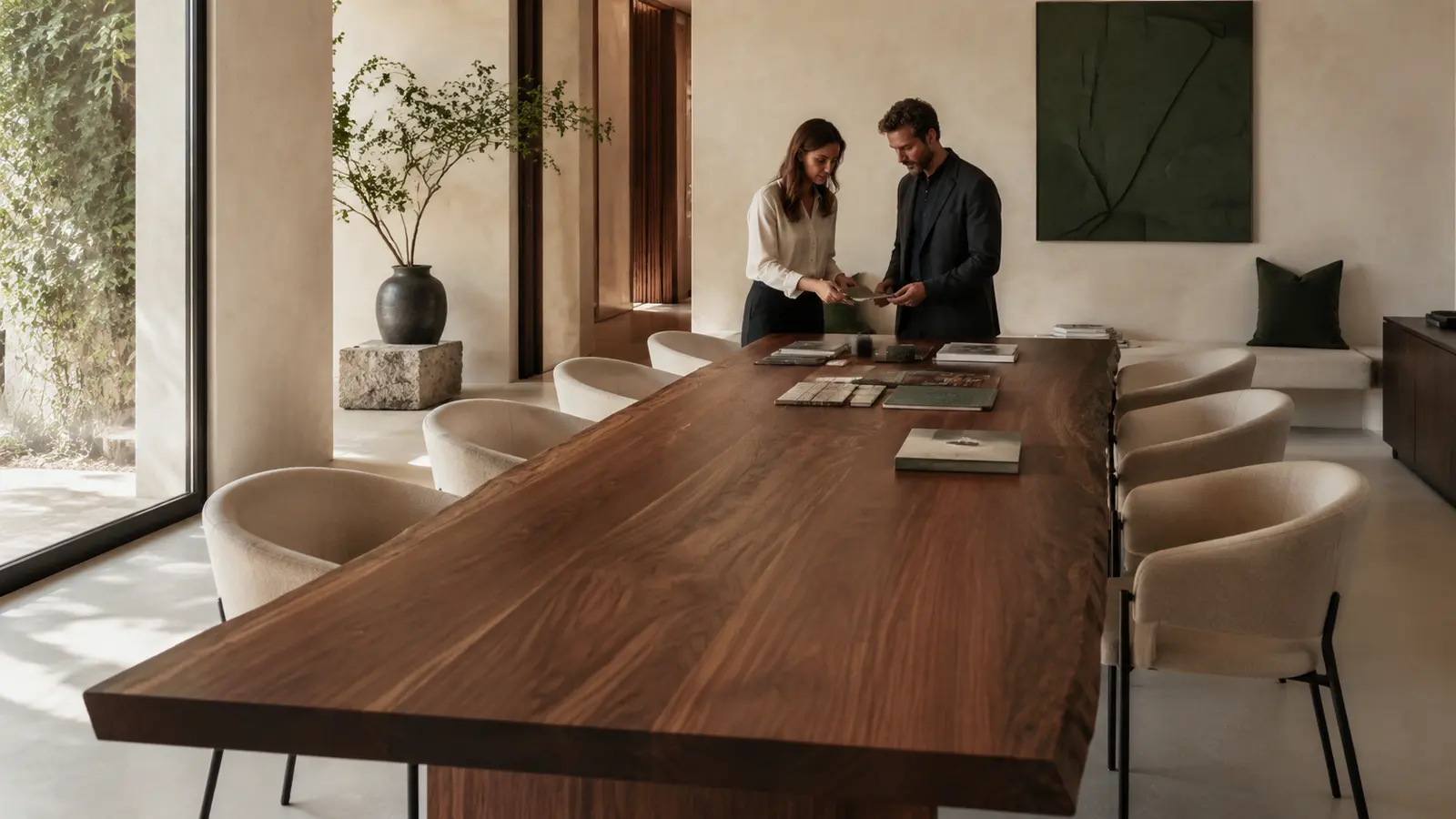
A Conference Table Is a More Expensive Asset Than Most Companies Treat It As
A conference table is usually one of the most visible, most heavily used pieces of furniture a company owns — on display in every internal meeting and every client visit. And yet most organizations buy it once and never think about it again, even though its daily usage load is far higher than any table in a home.
The Wear Profile Office Use Creates
A meeting table gets used multiple times a day, by different people, with different equipment, and that creates a very specific pattern of wear:
- Laptops — metal feet, hinges, and vent edges drag against the surface repeatedly, leaving fine scratches.
- Coffee and tea rings — a few meetings a day without coasters adds up to a lot of ring marks over a year.
- Pen and notepad pressure marks — writing directly on a hard surface leaves indentation marks over time.
- Water bottle condensation — repeated moisture exposure gradually stains wood and lacquer finishes.
- Presentation gear — cables, laptop stands, tablets, and phones being set down and picked up constantly adds cumulative wear.
Unlike furniture at home, this wear isn't shaped by one person's habits — it's shaped by dozens of different people's daily behavior, which makes it nearly impossible to control through policy or reminders.
The Corporate Image Angle
The conference table sits at the center of the room where clients and partners often form their first impression of your company. A scratched, dull, or stained table sends an unintentional signal about how much attention the company pays to detail — a small thing that facilities teams frequently overlook, but that clients notice.
The Cost Case: Protect or Replace?
Refinishing or replacing a corporate-grade conference table means real direct cost plus real disruption — removing the old table, sourcing a replacement, installing it, and losing use of the room during the process. Measured against a single scratch or stain problem, that cost is wildly disproportionate. A protective film is a low-cost way to push that entire replacement cycle years further out.
What TPU Film Brings to an Office Environment
MKK's SPF-190 Premium TPU film is well suited to the intensity of corporate use:
- Everyday scratches from laptops, cables, and equipment mark the film, not the table.
- Coffee rings and moisture never actually touch the surface underneath.
- Because the film is transparent, the table's corporate design, color, and finish remain unchanged.
- The self-healing property means fine scratches noticeably fade with gentle heat.
- For companies with multiple offices, a network of 320+ verified applicators means consistent quality across different cities without having to vet a new vendor each time.
- Each application automatically generates a QR-coded digital warranty — a concrete record that can be filed as part of the company's asset documentation.
How the Process Works for Businesses
Using "Fotoğrafla Fiyat Al" (Photo-to-Quote), you photograph the table with the on-screen 3-meter proportional ruler for scale. Pricing is calculated by a fixed formula covering materials, labor, surface prep, and service, VAT included. After approval and payment, a suitable applicator in the region is matched automatically, and a digital warranty is issued once the job is finished. The same process scales cleanly across multiple tables or multiple office locations.
The Bottom Line
Protecting a conference table isn't a cosmetic decision — it's a piece of corporate asset management. A small, one-time investment extends the table's usable life by years and pays off in both cost savings and the impression it leaves on the people sitting around it.