The Smartest Time to Protect New Furniture Is Before You've Used It Once
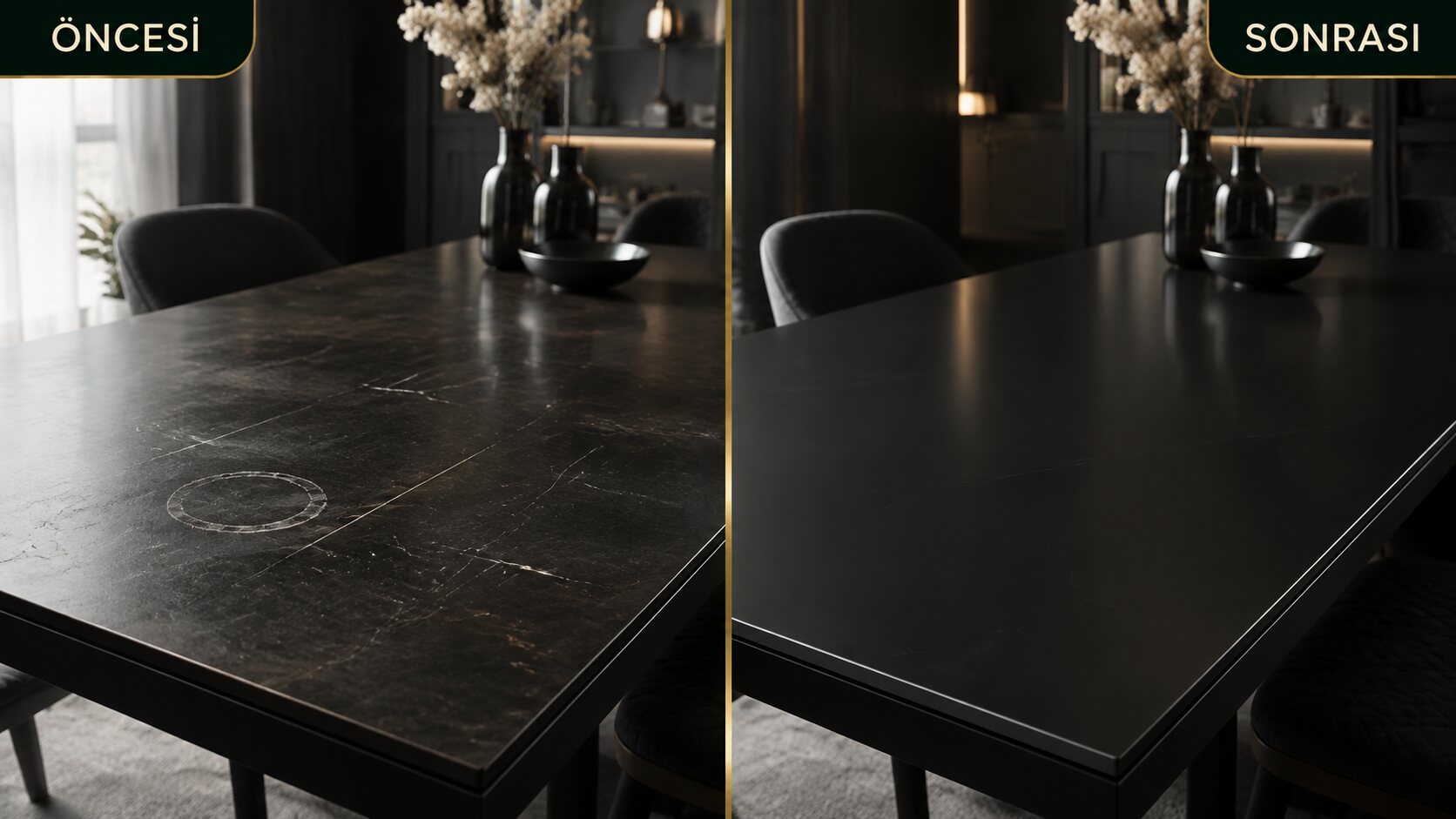
The First Scratch Usually Happens in the First Week
When furniture is new, everyone treats it carefully — for a few weeks. Then real life takes over: a glass gets set down without a coaster, keys land on the table, a pot goes straight onto the counter. Once the first scratch or stain happens, something shifts psychologically — the "well, it's already got one mark" mindset kicks in, care drops off, and the pace of wear accelerates from there. In practice, a piece of furniture's condition years down the line is largely decided in its first few months.
Why Protecting After the Fact Is Harder and More Expensive
Once a surface is already damaged, there are really only two options: live with it, or repair it — and repair is usually more involved than people expect.
- On marble, a deep acid etch requires professional stone polishing, and in some cases the surface never fully returns to its original state.
- On lacquer furniture, a deep scratch or color shift usually can only be fixed by full re-lacquering — expensive and time-consuming.
- On wood or laminate countertops, heat damage or deep scratches can require sanding and refinishing.
- On glass, a scratch can almost never be fully removed — only masked.
In other words, "we'll deal with it if something happens" quietly commits you to a repair bill that's several times higher than protecting the surface would have cost — and every repair means giving up some amount of the original, unmarked surface for good.
Why Protection Belongs on Day One, Not "Eventually"
A protective film is designed to preserve a surface as it currently is — which means it does its best work applied to a clean, undamaged surface. A film applied after damage has occurred can stop things from getting worse, but it can't undo what's already happened. That's why the right moment is the day the furniture is delivered, before it's used at all.
Where This Matters Most
- Newly purchased marble dining tables and coffee tables
- Freshly installed kitchen countertops
- New lacquer furniture (TV units, wardrobes, consoles)
- New office conference tables
- New glass tables and surfaces
What these all have in common is that they carry high value the moment they're purchased — and that value starts eroding not gradually over years, but from the very first careless contact.
A TPU Film Is an Investment You Barely See
MKK's SPF-190 Premium TPU film delivers this protection without changing how the furniture looks — available transparent, glossy, or matte:
- It forms a physical barrier against scratches, stains, and heat damage.
- Its self-healing property means fine scratches fade with gentle heat.
- TPU's high UV resistance means the film itself won't yellow over time.
- The low-tack adhesive applies without damaging the furniture underneath.
- It typically lasts 5 to 10 years.
Fitting This Into the Furniture-Buying Process
The day furniture is delivered, or shortly after, you can use "Fotoğrafla Fiyat Al" (Photo-to-Quote) to photograph the surface with the on-screen 3-meter proportional ruler for scale. AI evaluates only the surface; price follows a fixed formula. After approval, one of 320+ verified applicators in your region is automatically matched, and the work can typically be finished before the furniture has settled into daily use. A QR-coded digital warranty is issued automatically once it's done.
The Takeaway: Protection Is a Habit, Not a Repair
The biggest mistake people make with new furniture is putting off protection until "something happens." Real protection is an investment made before any damage occurs, while the surface is still in its most perfect state. Thinking about protection from day one keeps furniture looking — and holding its value — the way it did the day it arrived, for years.