How to Manage Fingerprints and Cleaning Marks on Matte Furniture
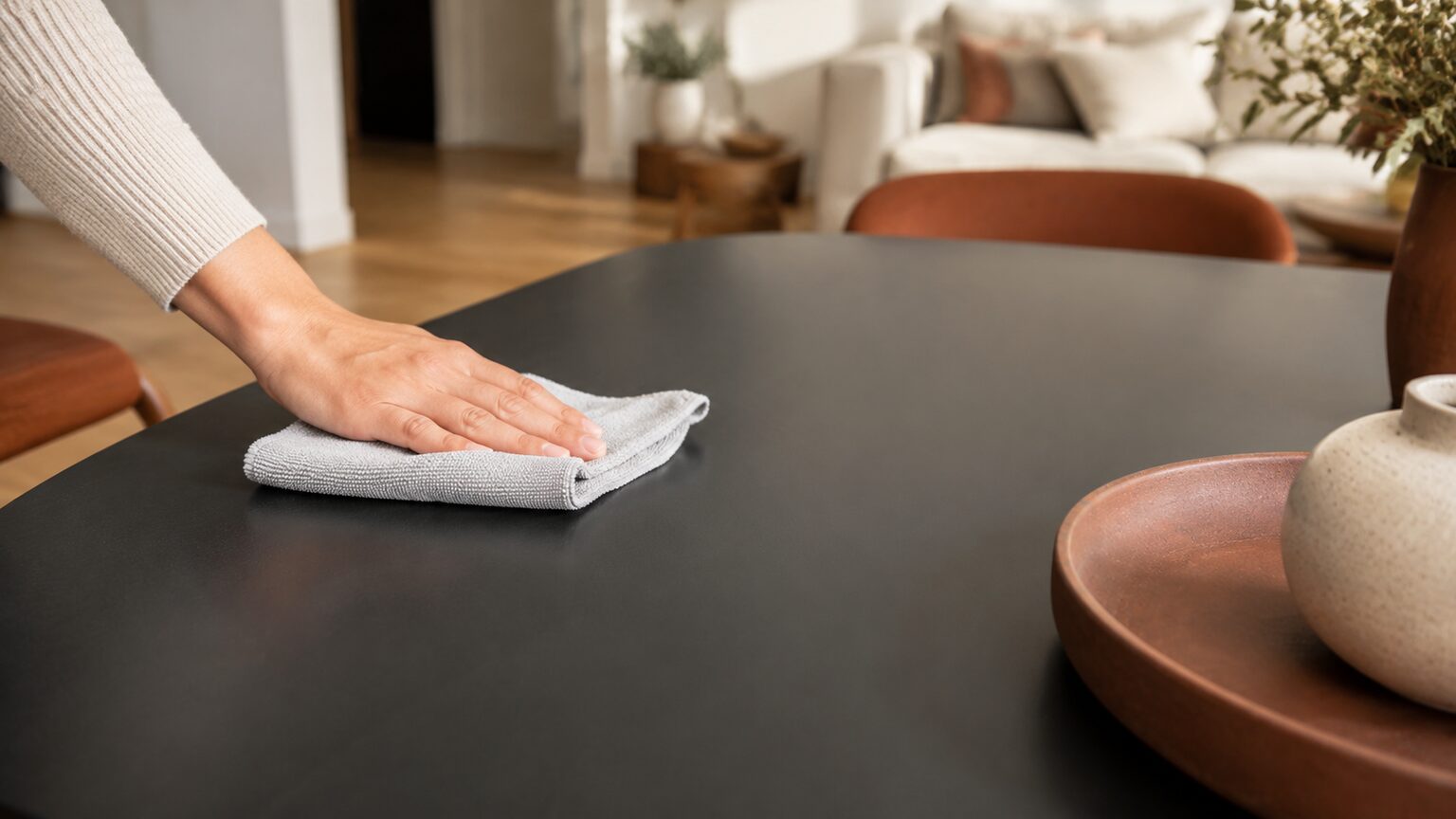
How to Manage Fingerprints on Matte Furniture
Matte finishes create a calm, premium appearance but can reveal skin oils, cleaner residue and wiping patterns. The solution is not more chemical; it is controlled removal with the right method.
First identify the finish. Matte lacquer, laminate, varnished wood and foil-faced panels may look similar but respond differently. Follow the manufacturer’s care instructions or test a discreet area.
Remove grit without rubbing, use a clean slightly damp microfiber cloth with light pressure, then dry with a separate cloth. Apply cleaner to the cloth rather than spraying the furniture, especially near edges and joints. Silicone polishes and unverified solvents may create uneven gloss.
A matte transparent protection film may be considered for heavily used suitable surfaces, but adhesion, texture and gloss matching must be tested in daylight and artificial light. Good matte care relies on minimal product, clean tools, low pressure and careful drying.
Practical Architectural-Wrapping Perspective
This topic should be evaluated as part of a complete architectural surface wrapping system, not as a claim about an isolated film. For lacquered and varnished furniture, the decisive variables include finish cure, gloss level, repair history and sensitivity to cleaners. A material name or a single laboratory value cannot establish compatibility with every finished item.
Decision Framework
| Stage | Evidence to Record | Practical Decision |
|---|---|---|
| Substrate review | Material, finish, repairs and previous care products | Confirm what is actually being wrapped |
| Use assessment | Contact, heat, liquids, cleaning and viewing angle | Define realistic protection priorities |
| Sample application | Adhesion, colour, gloss, edge behaviour and removal | Continue only when the result is acceptable |
| Installation | Product code, batch, method and installer | Make the project traceable |
| Aftercare | Approved cleaner, cloth, heat and spill guidance | Preserve both film and underlying finish |
Field Interpretation
The most reliable approach combines low-pressure cleaning, gloss matching and a controlled removal test. Transparent SPF film can help reduce risks associated with ordinary abrasion and staining on a suitable substrate, but it does not make furniture impossible to scratch, stain, overheat or damage. Existing moisture, weak varnish, open edges or structural defects must be addressed separately.
Technical references should be read with the exact specimen, method, unit and acceptance criterion. Evidence for raw TPU, a generic adhesive or another product family should not be presented as proof for the finished MKK® construction unless the product code and tested layer structure match.
Frequently Asked Questions
Can the decision be made from photographs alone?
Photographs support preliminary review, but they cannot confirm finish strength, moisture, chemical residue or removal behaviour. A discreet on-site test is still required.
Does a thicker film always provide better protection?
No. Thickness must be considered with carrier chemistry, topcoat, adhesive, optical quality, geometry and intended use.
Why is professional installation important?
It controls cleaning, cutting, tension, edges and documentation while preventing application on unsuitable furniture.