Kitchen Countertop Protection: Stopping Scratches and Heat Damage Before They Start
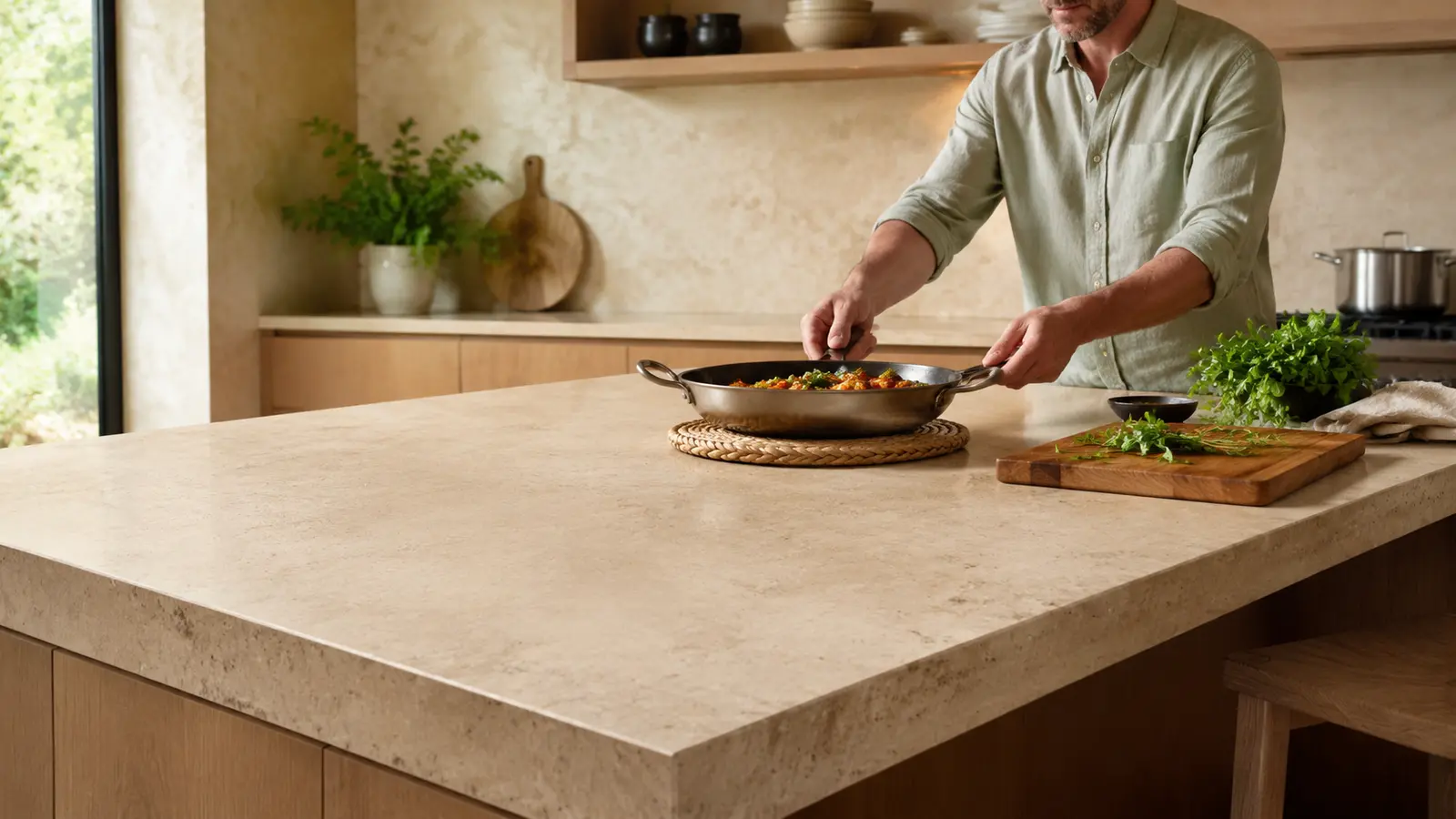
The Countertop Takes More Abuse Than Any Other Surface in the House
No surface in a home absorbs as much varied daily stress as a kitchen countertop. In the same square meter, you cut with knives, set down hot pans, splash acidic food, and wipe it down multiple times a day. Almost no material handles all of that equally well — which is why, over time, nearly every countertop accumulates fine scratches, dull patches, and heat marks, even with careful use.
The Two Problems That Show Up Most
Scratches
Even with a cutting board in play, knife tips, stand mixer attachments, pot and pan bases, and even rings or bracelets leave fine scratches on countertop surfaces. No single mark is noticeable on its own, but they accumulate, and eventually the surface loses its smoothness and shine.
Heat Marks and Thermal Shock
A tray straight from the oven or a pan straight off the stove, set directly on the counter, can cause permanent discoloration or micro-cracking — especially on lacquered, laminate, or certain composite surfaces. Sudden temperature change stresses the material at a structural level, and the damage often isn't visible immediately; it shows up over time.
Risk Varies by Countertop Material
- Lacquered and laminate counters are the most vulnerable to both heat and scratching.
- Marble and natural stone counters are sensitive to acidic foods (see our article on marble staining).
- Composite and granite-look surfaces hold up relatively well but can lose their shine under heavy daily use.
Why the Usual Precautions Don't Hold Up
Countertop protection in most kitchens depends on habits that aren't consistent: a cutting board isn't always within reach, a trivet gets forgotten in the moment, the rough side of a sponge scrapes across the surface without a second thought. As long as protection depends on remembering to do the right thing every single time, a gap eventually opens up — and that's when the damage happens.
A TPU Film Turns Protection Into Something Passive
MKK applies SPF-190 Premium TPU, a transparent film that covers the entire countertop and shifts protection from "something you have to remember" to "something the surface simply has." In practice:
- Knife tips, cookware, and everyday contact mark the film's surface, not the countertop underneath.
- Quality TPU's well-known self-healing property means these fine scratches noticeably fade or disappear with gentle heat.
- The film isolates the actual countertop material from direct contact during a sudden hot-pan moment.
- Because it's fully transparent, the counter's original color and finish remain unchanged — available in glossy or matte to match the existing surface.
- The low-tack adhesive applies without damaging the countertop and can be removed cleanly later if needed.
How the Application Works
Using "Fotoğrafla Fiyat Al" (Photo-to-Quote), you photograph the countertop with an on-screen 3-meter proportional ruler for scale. An AI model reads only the size and condition of the surface — pricing is calculated through a fixed formula covering materials, labor, surface prep, service, and a minimum completion fee, plus VAT. After payment, the system automatically matches you with one of 320+ verified, contract-approved applicators in your region. Once the work is done, a QR-coded digital warranty is issued automatically.
When Should You Apply It?
The ideal timing is right after installation, before the countertop is ever used. That said, even a counter with existing light scratches or dullness benefits — the film stops further damage and visibly improves the current appearance.
A kitchen countertop is the most-used and least-pampered surface in most homes. A TPU protective film doesn't ask you to change your habits — it simply removes the everyday wear from the equation.