TPU vs. PVC Protection Film: What Actually Sets Them Apart
Two Polymers, Two Different Performance Classes
One of the most common misconceptions in the surface protection film market is that TPU and PVC films "do the same job." In reality, these are fundamentally different materials at the polymer chemistry level, and that difference shows up directly in real-world lifespan and performance. Here's a technical comparison across four concrete criteria.
1. Elasticity and Stretch Recovery
TPU (thermoplastic polyurethane) is an elastomer by nature — its molecular chains contain flexible soft segments that allow it to deform significantly and return to its original shape after stretching. PVC (polyvinyl chloride), by contrast, is inherently a rigid polymer; flexibility has to be engineered in externally through plasticizer additives.
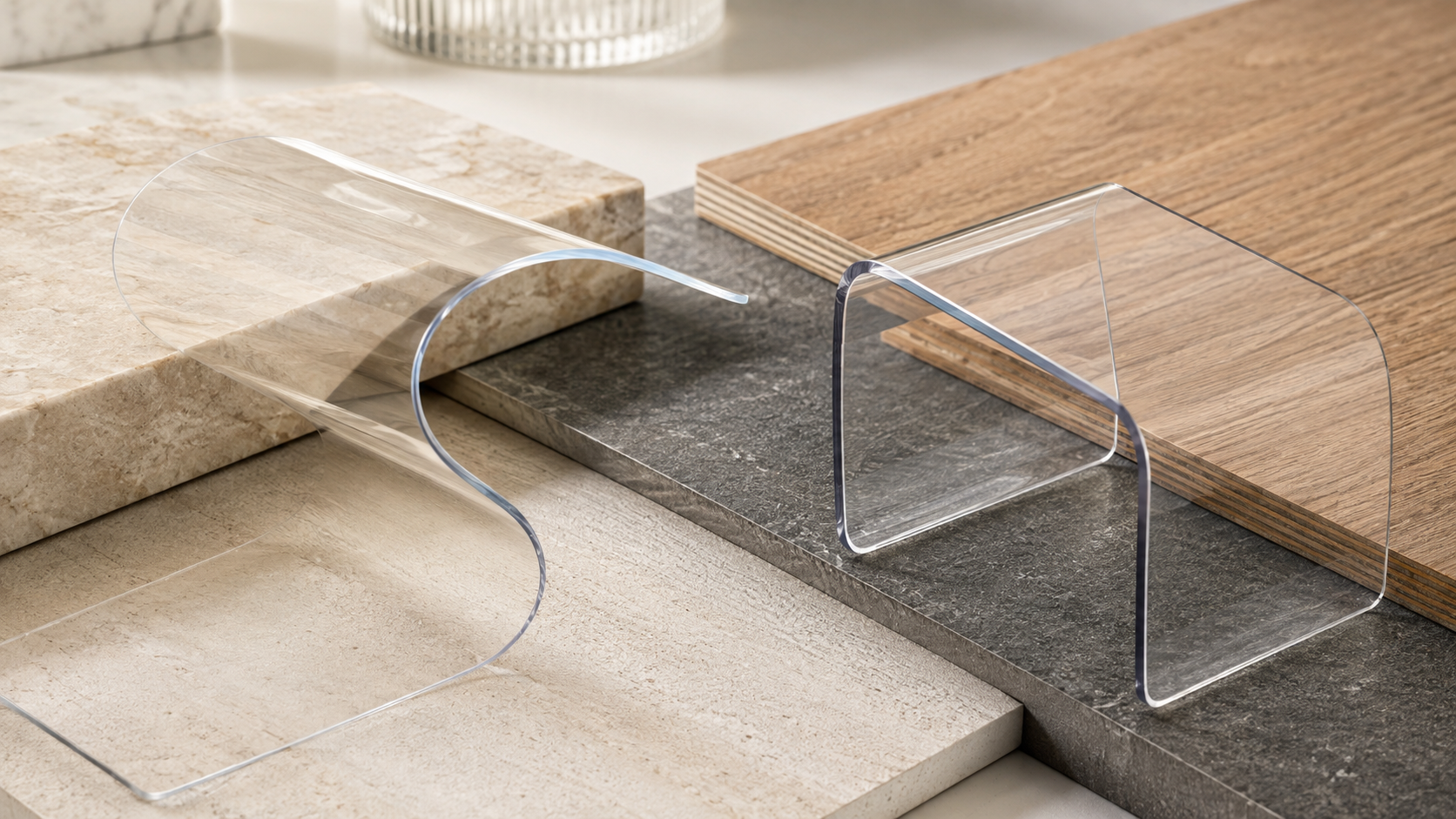
In practice, this means TPU film wraps complex geometry — console edges, oval coffee table profiles, curved marble countertop edges — without leaving stress marks or creasing. PVC films are more prone to visible tension lines ("silvering") on these same contours and carry a higher risk of cracking at sharp edges.
2. UV Resistance and Yellowing
This is the most consequential long-term difference between the two materials. The plasticizer additives that give PVC its flexibility tend to migrate out of the material over time, especially under UV exposure. That migration process causes the film to stiffen and become brittle while producing the characteristic yellow-brown discoloration. PVC's carbon-chlorine molecular bonds also break down under UV light, accelerating yellowing further.
TPU, particularly polyester-based TPU formulations, doesn't rely on migrating plasticizers at all — its flexibility comes from the polymer's own chain structure. That means TPU stays clear and non-yellowing for years. This is precisely why the automotive paint protection film (PPF) industry largely moved from PVC to TPU decades ago.
3. Optical Clarity
TPU films are formulated for low haze and high light transmission, so whatever is underneath — marble veining, wood grain, the depth of a lacquer finish — reads through with no visible distortion. PVC films, due to their plasticizer content and more crystalline polymer structure, tend toward gradual clouding over time, an effect that's especially noticeable on surfaces exposed to sunlight.
4. Self-Healing Capability
This is one of TPU's clearest advantages over PVC. TPU's elastomeric polymer chains, when lightly scratched, tend to relax back toward their original molecular configuration under heat — sunlight, warm ambient air, or a light heat application — causing most surface scratches to largely disappear. PVC's more rigid, crystalline structure doesn't exhibit this "memory" behavior; scratches on PVC are permanent.
5. Chemical Resistance
Day-to-day use means surfaces come into contact not just with liquids, but with cleaning products, alcohol-based disinfectants, and solvents. TPU's polyurethane chain structure holds up better against most household solvents and alcohol than PVC, which can show surface softening or dulling on contact with certain solvents. This difference becomes especially noticeable over time on surfaces that get disinfected frequently, such as kitchen countertops.
6. Cost vs. Durability Trade-off
PVC films carry a lower upfront cost than TPU, which makes them attractive in some applications. But the picture changes when you look at durability: PVC's yellowing, stiffening, and cracking typically become noticeable within a few years, while quality TPU film retains most of its performance over a 5-10 year span, depending on surface type and usage intensity. TPU therefore trades a lower purchase price for a lower total cost of ownership — fewer replacements, longer aesthetic life.
Which Material Fits Which Application
For premium furniture, marble and natural stone surfaces, and any application where long-term aesthetics matter, TPU has become the standard choice precisely because of these technical properties. PVC still has a place in shorter-lifespan, temporary, or cost-driven applications — but where the goal is durable, visually consistent long-term protection, TPU's UV resistance, optical clarity, and self-healing capacity are the deciding factors.
Bottom Line
The difference between TPU and PVC isn't marketing language — it's a direct consequence of polymer chemistry. Across elasticity, UV/yellowing resistance, optical clarity, and self-healing capability, TPU delivers a materially superior performance profile, particularly for long-term, visible surface protection applications.