Surface Preparation: What Really Determines Film Adhesion Before Installation
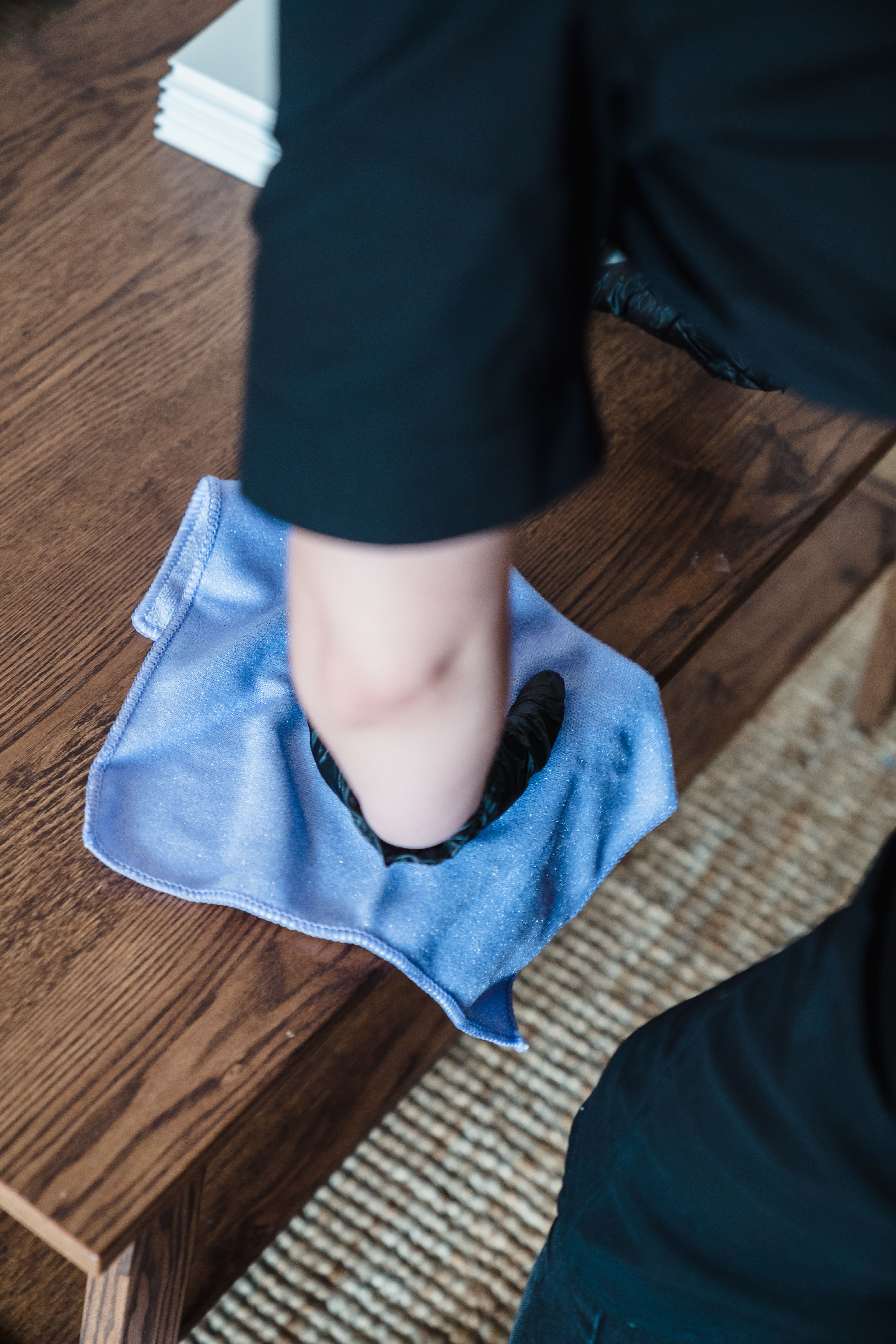
The Invisible Step That Determines the Outcome
The success of a protection film installation is often decided not by the film itself, but by how carefully the surface was prepared before the film ever touches it. Surface prep is the invisible part of the process — and every step skipped or rushed here comes back months later as bubbling, edge lifting, or uneven adhesion. This article covers the three areas that matter most before installation: cleaning, particle control, and ambient conditions, along with the technical reasons each one matters.
1. Deep Cleaning: The Residues You Can't See
Surfaces frequently carry residues that are invisible to the eye but block adhesion outright:
- Oil and fingerprint residue: the thin oil film that accumulates on kitchen surfaces prevents the adhesive from making direct molecular contact with the surface — and it can be present even on a surface that looks perfectly clean.
- Silicone-based cleaner or polish residue: silicone compounds, common in furniture polishes and stone sealants, create a nearly impenetrable barrier for adhesive. A surface with silicone residue may look like the film has bonded well in the first few days, only to start lifting at the edges over time.
- Mineral/limescale deposits: especially on marble and stone, mineral residue left behind as water dries creates a microscopically rough layer that prevents full adhesive contact with the surface.
Proper preparation requires a multi-stage cleaning process using silicone-free cleaning solutions specifically formulated to strip these residues completely.
2. Dust and Particle Control: A Millimeter Problem With a Visible Result
Even a single dust particle or stray hair left on the surface during application becomes a small but permanent raised defect under the film — one that's especially noticeable under raking light on glossy surfaces. The mechanism is simple: the film bonds on top of the particle rather than around it, lifting off the surface by exactly the particle's height.
This is why professional installation requires controlling dust not just on the surface itself, but in the surrounding environment. Applications carried out outdoors, in windy conditions, or near a dust source (construction, a busy road) carry a materially higher risk of particle-related defects, no matter how careful the technician is.
3. Ambient Temperature and Humidity: The Adhesive's Working Range
Adhesive performance isn't a fixed property — it varies with temperature and humidity:
- Low temperature: adhesive viscosity increases, making full molecular contact with the surface harder to achieve, which produces weak initial bonding.
- High humidity: a thin, invisible moisture layer can form on the surface, acting as a barrier between adhesive and substrate and raising the long-term risk of bubbling.
- Excessively high temperature: can cause the adhesive to set prematurely and unevenly before full contact is achieved, making correct positioning and air evacuation harder to control.
Professional installations are therefore carried out within the manufacturer's specified temperature and humidity range — outside that range, even the highest-quality film will underperform, regardless of its technical capacity.
4. Assessing Existing Surface Damage
Before film is applied, any existing scratches, cracks, or pitting on the surface needs to be assessed. Film does not hide these defects — its thin, transparent structure reflects whatever is underneath exactly as it is. Where needed, repairing these defects before application (filling small cracks in marble, for example) matters for both aesthetics and adhesion quality; an unrepaired pit or crack can trap an air pocket under the film.
Curing Time and Early Use
Once installation is complete, the adhesive needs a certain amount of time to form a full, permanent bond with the surface (the curing process). Avoiding aggressive cleaning chemicals, excessive moisture, or heavy mechanical pressure on the surface during this window directly affects the final bond quality.
Bottom Line
The long-term performance of a protection film is largely decided at a stage nobody sees: cleaning rigor, particle control, and correct ambient conditions. No matter how high the quality of the film itself, a gap in preparation shows up directly in the result. Proper surface prep is the invisible but most critical component of a protection film investment.