Substrate Identification 101: Marble, Lacquer, Wood, Glass and Metal
Identify Before Selecting Film
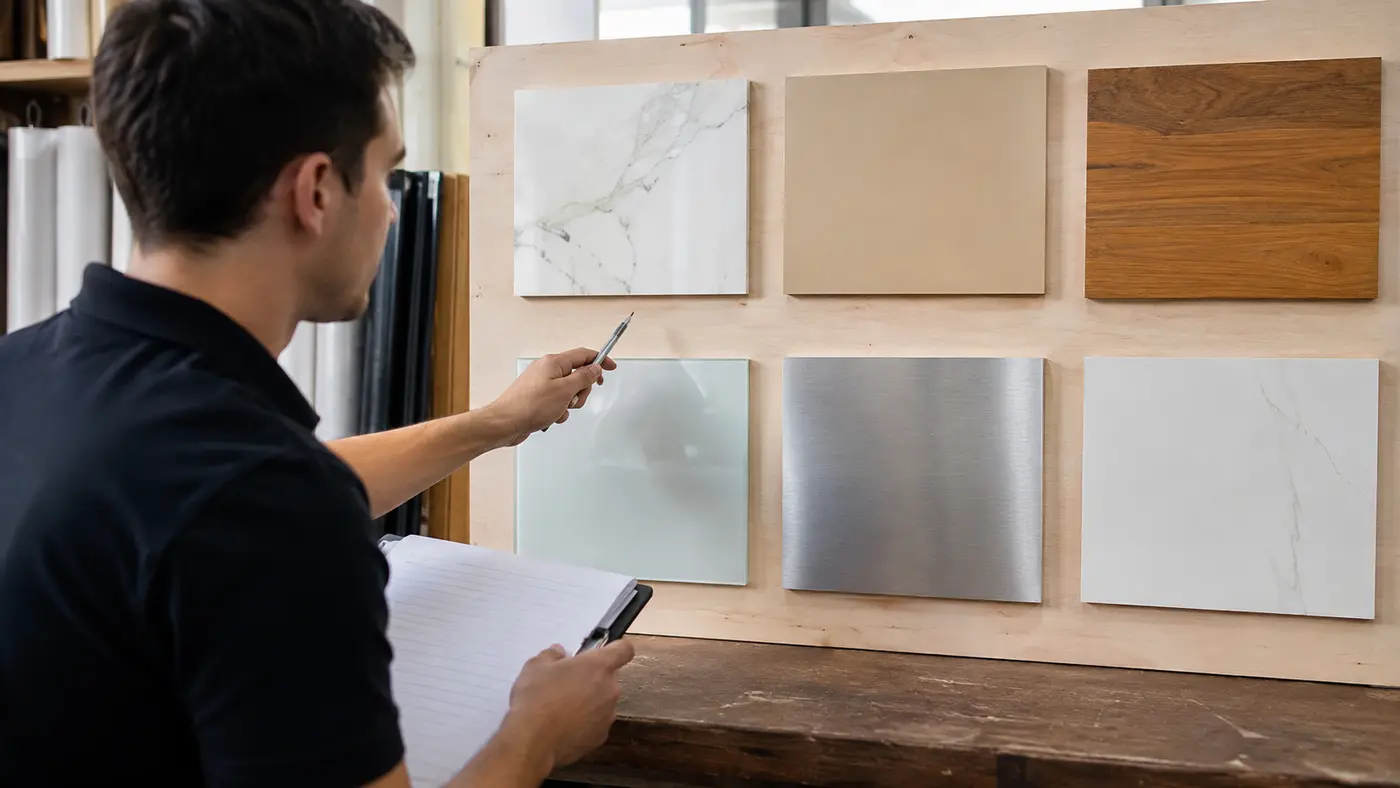
Two tables that look identical may be made from different materials. A marble-look surface may actually be natural stone, porcelain, printed glass or laminated MDF. Photographs support preliminary review but cannot determine suitability by themselves.
Five common substrates
| Substrate | Inspect | Main risk |
|---|---|---|
| Marble/natural stone | Pores, filler, cracks, polish | Moisture, staining, filler release |
| Lacquered MDF | Paint and primer integrity, repairs | Weak coating lifting during removal |
| Natural wood | Varnish, grain, open edges | Moisture uptake and weak varnish |
| Glass | Coatings, scratches, silicone edges | Visible contamination and cutting risk |
| Metal | Paint, oxidation, brushing direction | Paint lift and surface marks |
Questions to ask
When was the item made? Has polish, silicone, oil or a care product been used? Was it repaired? Is exposure to heat, water or chemicals frequent? Record the answers.
Red flags
Blistered paint, unstable varnish, moisture, open cracks, fresh repairs, silicone residue, unidentified oily chemicals and powdering stone all require stopping. Cleaning does not solve structural defects.
Correct decision sequence
Identify the material → inspect the finish → understand use conditions → perform a hidden-area sample → record approval or rejection.
Official and manufacturer sources
- OSHA — Hand and power tool safety
- 3M — DI-NOC installation guide
- Avery Dennison — Technical installation documents
- XPEL — Training and certification
Manufacturer links are provided to compare general installation disciplines; they are not evidence of MKK® SPF product performance. Always follow the instructions for the exact product being installed.