How to Record Existing Damage Before Film Application
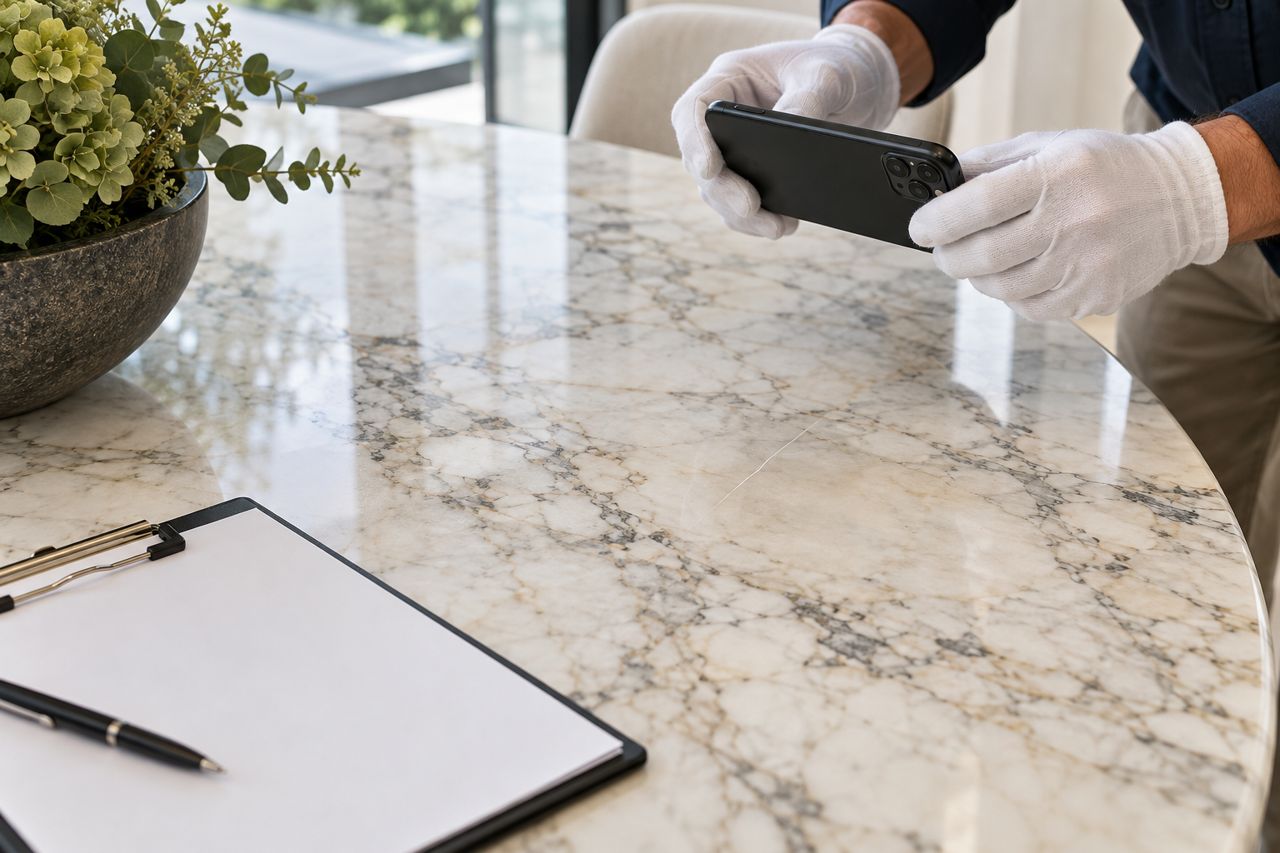
A pre-application record makes the starting condition of a surface clear to both customer and applicator. It helps distinguish existing damage, any proposed repair and the scope of film application. This lesson describes a documentation workflow, not a method for diagnosing every defect from photographs.
Identify the item
Record the furniture item, application area and known material. Give similar items separate identifiers. If the substrate is unknown, say so instead of inferring natural stone or solid timber from its appearance.
Photograph at three levels
Take an overall view, views of the top and edges, and close-ups of observed issues. Make each close-up traceable to the overall image through a location number or a simple separate sketch.
Record reflection-dependent marks from another angle. Avoid filters and appearance-changing edits. Do not abrade the surface to make damage easier to photograph.
Separate observations from explanations
Describe what is visible: an edge lifting, a dull area or a fine scratch. Where the cause is unconfirmed, record that explicitly.
Customer history can be recorded separately: “The customer reports a previous polish treatment” preserves the information without treating it as verified substrate documentation.
Include the item identifier, material, observation, location, history, date and proposed next step.
Connect the record to the decision
Cracking, swelling, loose finishes or unexplained moisture require further assessment rather than concealment. MKK® does not apply films to edge-banded products because of swelling risk. A photographic record does not replace suitability approval.
For removal of an existing film, retain separate records before removal and after the underlying surface is exposed. Preserve the first record rather than overwriting it.
Review the scope with the customer
Discuss the record before work begins. Clarify which existing marks may remain visible, which areas need further assessment and which operations are included in the quotation.
Share records only with people who need them for the work. Frame images around the surface where private surroundings would otherwise be visible. Promotional use needs separate consideration and permission.
Practice
Prepare an example table record linking overall, edge and close-up photographs. Write the location, known facts and next step for each observation. Ask another applicator to locate the same areas using the record.