Differences Between Wet and Dry Film Application
Differences Between Wet and Dry Film Application
Wet and dry installation serve similar goals but create different risks depending on the surface, adhesive and film. Learn how the method is selected.
Technical overview
Furniture protection must be treated as a system involving the substrate, finish, adhesive, protective film and use environment. A product description alone cannot establish compatibility. Marble, lacquer, wood, glass and composite surfaces can respond differently to cleaning, adhesive contact, moisture and removal.
Practical evaluation
Before full installation, the surface should be identified, cleaned with a compatible method and tested in a hidden area. The sample should be checked for initial contact, haze, colour or gloss change, edge behaviour and controlled removal. Film should not be installed when the finish is unstable, contaminated, moisture-sensitive or otherwise unsuitable.
Key considerations
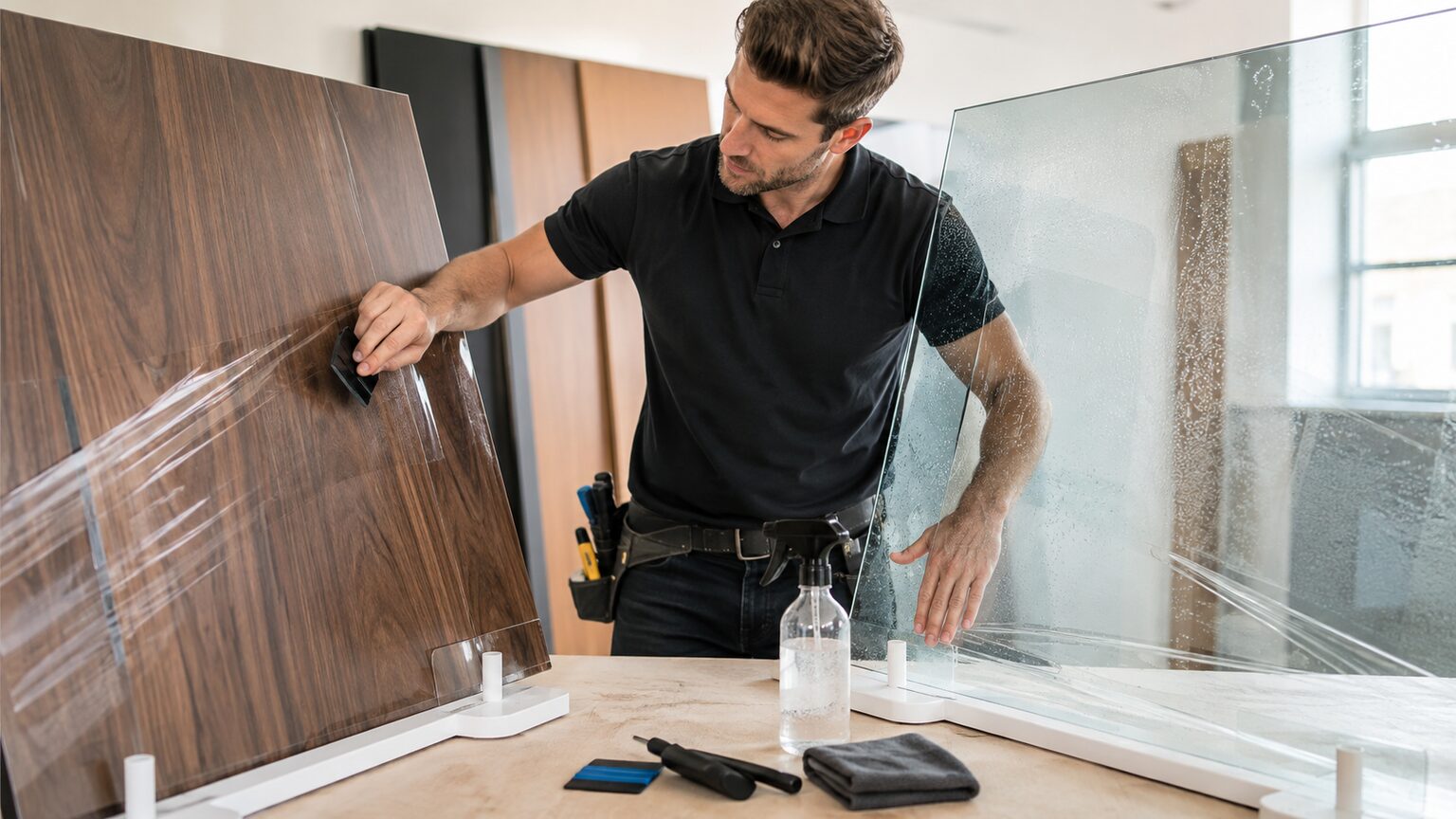
- Islak Uygulama: Islak uygulamada kontrollü bir uygulama sıvısı, filmin ilk tutunmasını geçici olarak azaltarak konumlandırmayı kolaylaştırır. Sıvı rakleyle dışarı alınır ve yapıştırıcı zaman içinde nihai temasına ulaşır.
- Kuru Uygulama: Kuru yöntemde film doğrudan yüzeye temas eder. Suya duyarlı doğal ahşap, açık kenarlı MDF veya sıvının tahliye edilemeyeceği alanlarda nem riskini azaltabilir.
- Yanlış Yöntemin Sonuçları: Fazla sıvı, kenarda nem kalması, yapıştırıcının geç aktive olması veya gözenekli zemine su girmesi sorun oluşturabilir. Kuru uygulamada ise hava kanalı, kırışıklık, gerilmiş kenar ve yeniden kaldırma sırasında yüzey zorlanması görülebilir.
- Karar Nasıl Verilir?: Yöntem; film üreticisinin talimatı, yüzeyin su hassasiyeti, kenar yapısı, uygulama sıcaklığı ve test sonucuna göre seçilir. Tek bir yöntem bütün mobilyalar için doğru değildir.
Installation checklist
- Identify the surface and existing finish.
- Follow the film manufacturer's instructions.
- Test a hidden area before full installation.
- Avoid absolute claims without relevant laboratory evidence.
- Record the product, surface, test result and care instructions.
Conclusion
Transparent surface-protection film can help reduce risks from ordinary use when the complete system is compatible. It does not make furniture impossible to scratch, stain or damage. Reliable results depend on assessment, suitable materials, professional installation and correct maintenance.