Choosing a Qualified Applicator: Certification and Quality Standards That Matter
The Variable That Matters as Much as the Material
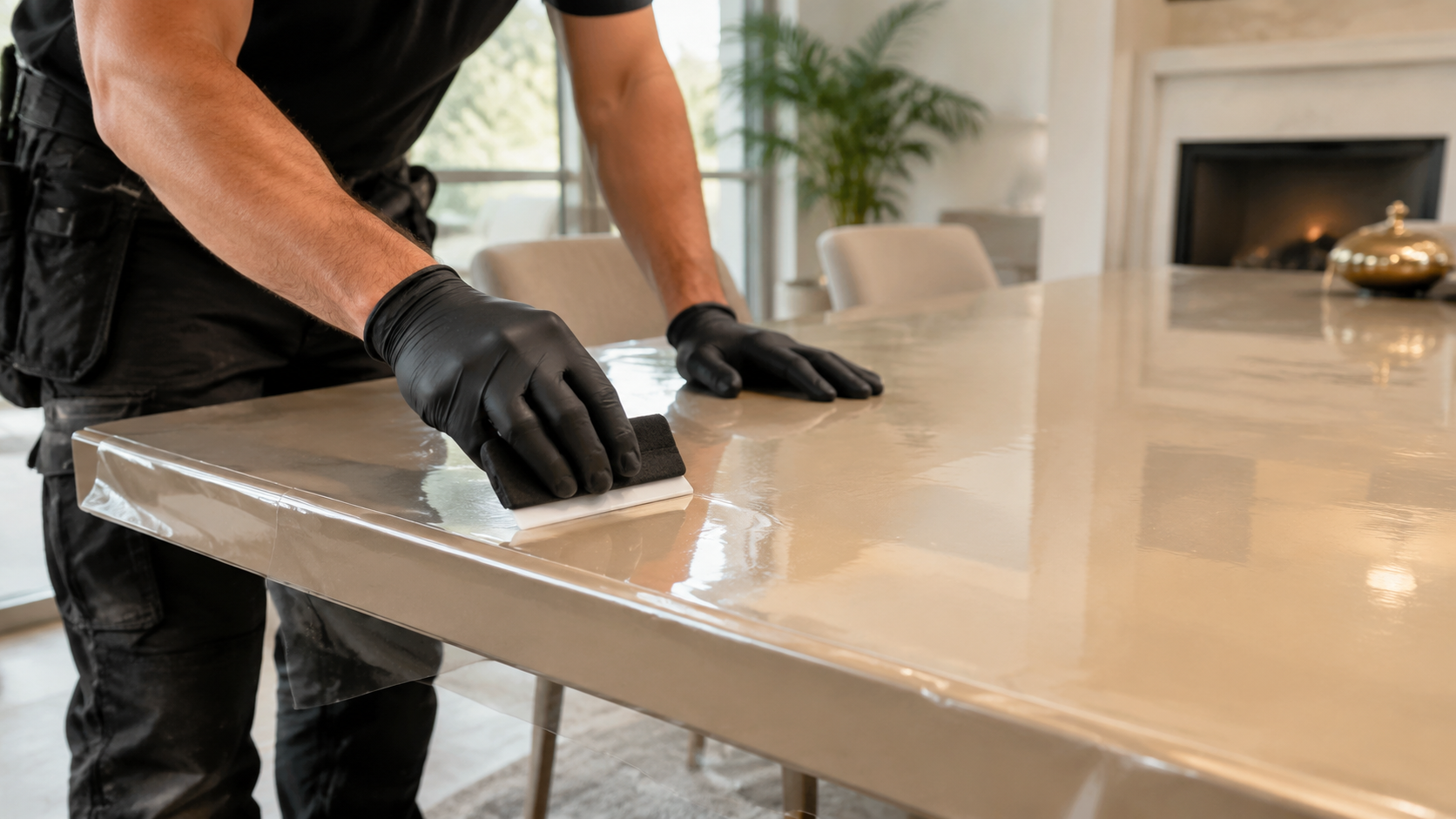
A fact that's often overlooked in the surface protection film industry: even the highest-quality TPU film fails quickly when poorly installed. Bubbling, edge lifting, visible stress lines, and incomplete coverage are almost never a material defect — they're an installation defect. This article looks at the concrete criteria that separate a qualified applicator from an unqualified one, and how MKK verifies those criteria across its network.
What Poor Installation Actually Looks Like
Work from an inexperienced or poorly trained applicator typically shows up as:
- Bubbling: air or moisture trapped under the film expands over time into visible bubbles. Correct technique requires a specific sequencing and pressure method that fully evacuates air from under the film during application.
- Edge lifting: insufficient edge heating or incorrect tension causes edges to separate over time, opening a path for dirt and moisture to get underneath the film.
- Stress lines: stretching film across curved surfaces at the wrong angle leaves visible wave or crease marks under light.
- Poor fit/cutting errors: inaccurate surface measurement results in gaps or overhang at the edges.
None of these failures relate to the film's material quality — they stem entirely from a gap in the applicator's experience and technical discipline.
What Separates a Qualified Applicator
A genuinely competent applicator combines several things at once:
- Surface-specific technical knowledge: marble, lacquered furniture, glass, and wood each require different prep and tensioning techniques; a one-size-fits-all approach produces flawed results.
- Correct tool and equipment use: heat gun technique, squeegee hardness/angle, and cutting precision are invisible details that directly determine the outcome.
- Quality-control discipline: checking the finished surface under raking light for bubbles or stress lines should be a standard final step, not an afterthought.
- Accountable business practice: an applicator who documents the job and can be reached for warranty support afterward.
How MKK Verifies Its Applicator Network
To reduce this risk, MKK manages a network of over 320 applicators through a multi-step verification process before anyone is added:
- Region verification: each applicator's actual service area is clearly defined, so customers are matched with someone genuinely local and familiar with the region.
- Expertise assessment: the surface types an applicator has real experience with (marble, countertops, lacquered furniture, glass, etc.) are recorded.
- IBAN and tax/ID verification: official identity and financial information confirm the applicator is a real, accountable business or individual — this keeps untraceable, off-the-books providers out of the network.
- Signed Applicator Agreement: every applicator signs a formal agreement defining service standards, warranty obligations, and quality expectations — making the accountability relationship legally and commercially binding.
Scoring and Ongoing Performance Tracking
Verification isn't a one-time gate that ends once an applicator joins the network. Every completed job feeds into that applicator's performance score — customer feedback, warranty claim rate, and job-completion discipline are all tracked over time. Rather than a static approval that's checked once, this creates a continuously updated quality record, so an applicator's standing in the network reflects real field performance, not just the information submitted at sign-up.
How Matching Actually Works
When a request comes in, the system identifies the best-fit applicator through a rule-based, deterministic ranking of region, expertise, capacity, and performance score. This process relies on clear, repeatable criteria rather than AI prediction — which keeps it both transparent and consistent. Every customer is systematically matched with a verified applicator with proven expertise in their region.
Why This Matters So Much
The real return on a protection film investment depends not just on the film's technical specifications, but on how correctly it was installed. Even the best TPU film can start lifting at the edges within a year or two if poorly applied; the same film, correctly installed, can perform without issue for 5-10 years. That makes applicator selection just as decisive as material selection — sometimes more so.
Bottom Line
In protection film projects, material and installation are inseparable. A network of applicators bound by verified identity, proven expertise, and a signed agreement gives customers not just a quality film, but an installation guarantee that the film actually delivers on what it promises.